Commercial Kitchen Drain Blockage Cleared near Oxford – Fat and Grease Build-Up
No matter how careful a kitchen is, fats, oils and food waste inevitably enter the drainage system. Over time this build-up can restrict pipework and eventually cause serious blockages — something that can disrupt or even temporarily close a busy commercial kitchen.
We were recently called to a commercial kitchen near Oxford, where a floor drain was draining slowly and unpleasant smells had begun developing around the back of the kitchen.
As soon as the sinks were tested and the floor drain (gully) started to back up, it was clear from visible grease that this would take more than a simple plunge to get it going. Luckily, our jetting hose could reach from the back door, so we were able to use high pressure water jetting to not only clear the blockage, but also break up and shift all the fat and grease that had been slowly reducing the diameter of the pipe by forming fat along the length of the underground pipe.
Commercial kitchens produce large amounts of fats, oils and grease (often called FOG). Even when staff are careful, small amounts enter the drainage system during washing and cleaning.
Over time these substances cool and solidify on the inside of pipework, gradually restricting the flow.
Commercial and Household Grease
The build-up of fat can be surprisingly solid.
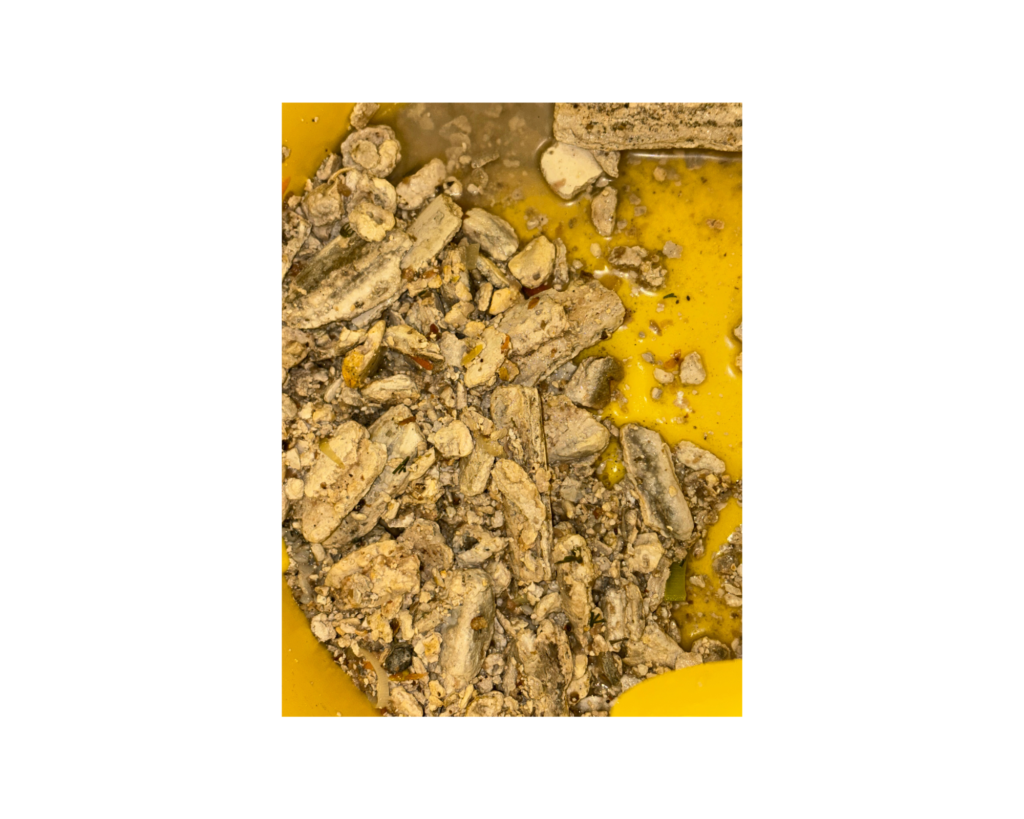
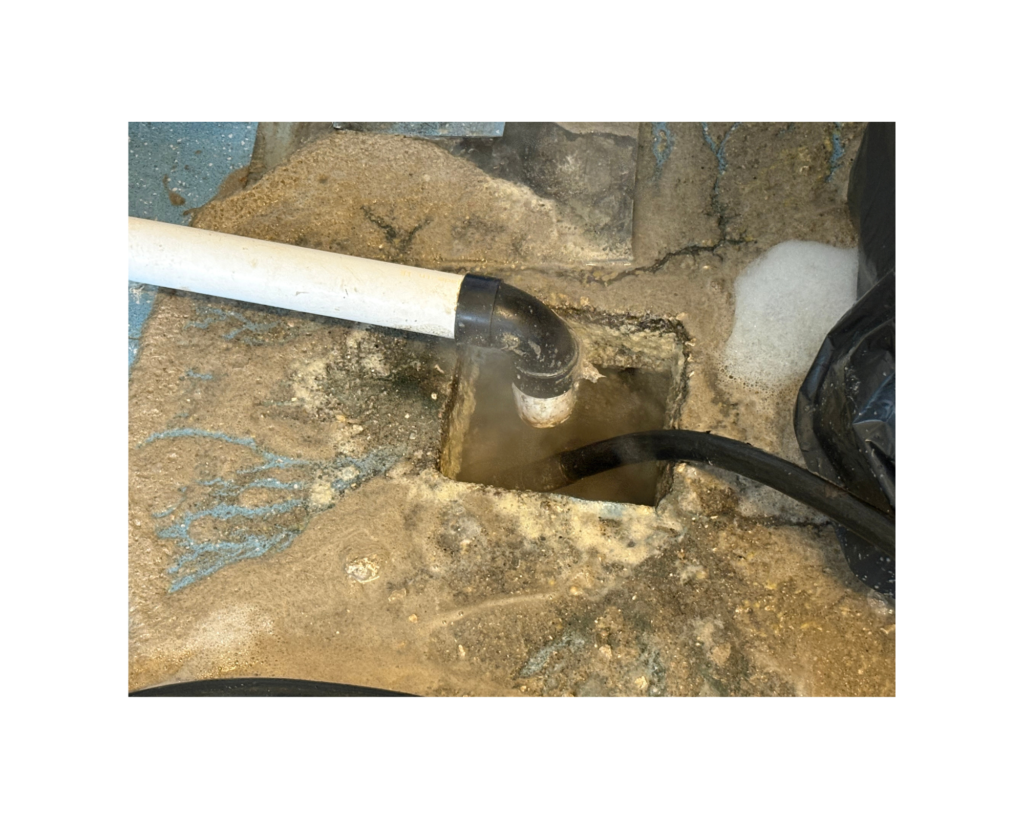
From the photo shown here you can see where solid fat had accumulated and completely restricted the pipe – which was only 2″ diameter but the fat filled the bottom the wetvac…
No matter the type of kitchen, it’s a matter of volume and time, both residential and commercial kitchens can suffer from fat and grease, even when as much care as possible has been taken.
Over time:
Residues from plates such as sauces end up flowing with the waste water down the plughole.
Bits of solid food waste get past, especially when washing up is done in large volumes, and can block the gaps where fat is forming, adding to the mass.
As free flowing grease molecules cool down they cling to the pipe. Once underground, they combine with calcium and become solid fat.
As opposed to other kinds of blockages which form in one place, fat blockages occur when the entire length of the pipe is reduced, allowing less and less water to pass through.
Back to our example, this was repeatedly jetted from the floor drain as there was no access downstream, and we didn’t want to disrupt the customer’s business by poking around where people were sitting.
But by spending some time using high pressure water jetting and a specialist nozzle designed to cut fat and grease as it passes through, we both cleared it and degreased the entire line so it wouldn’t block anytime soon.
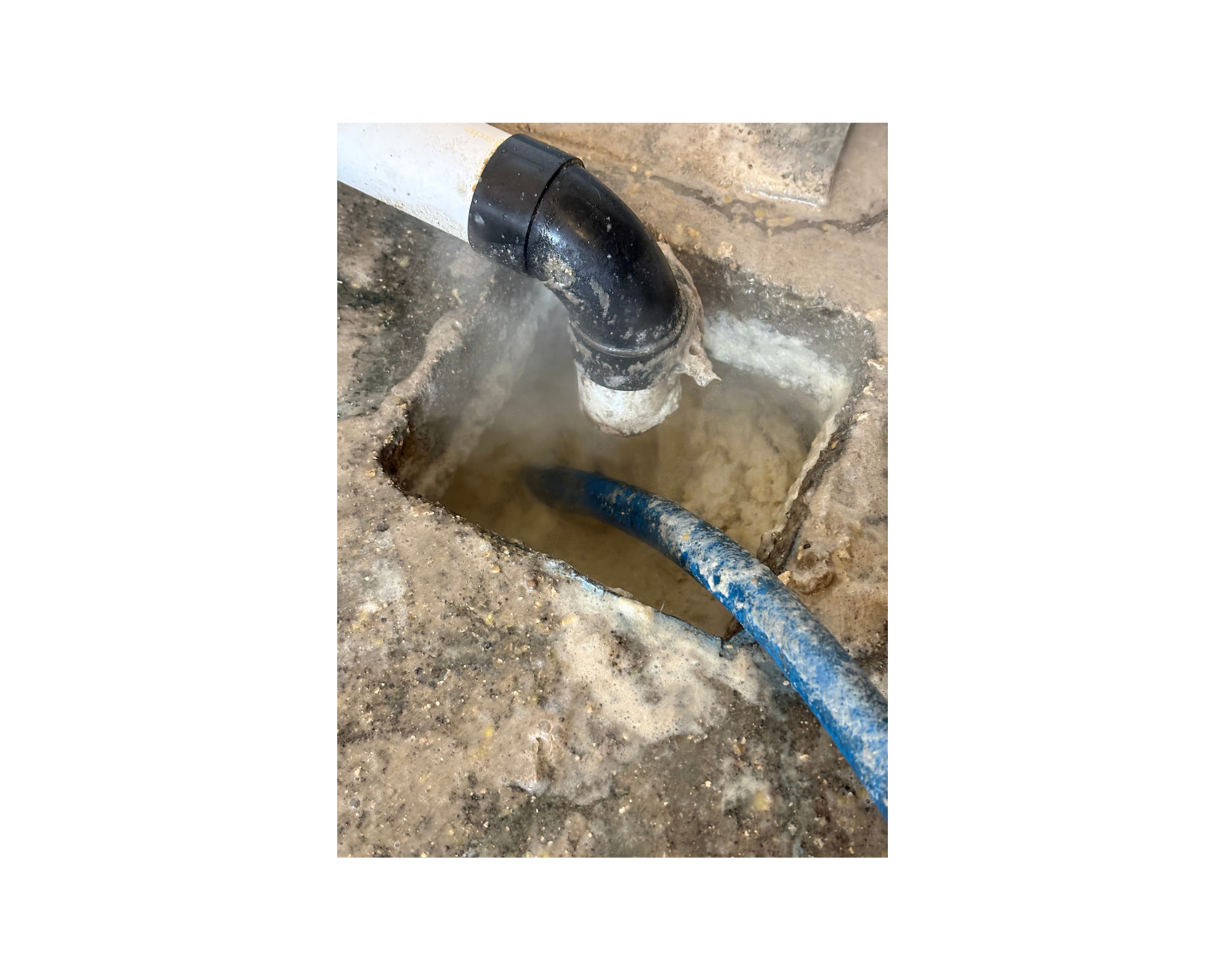
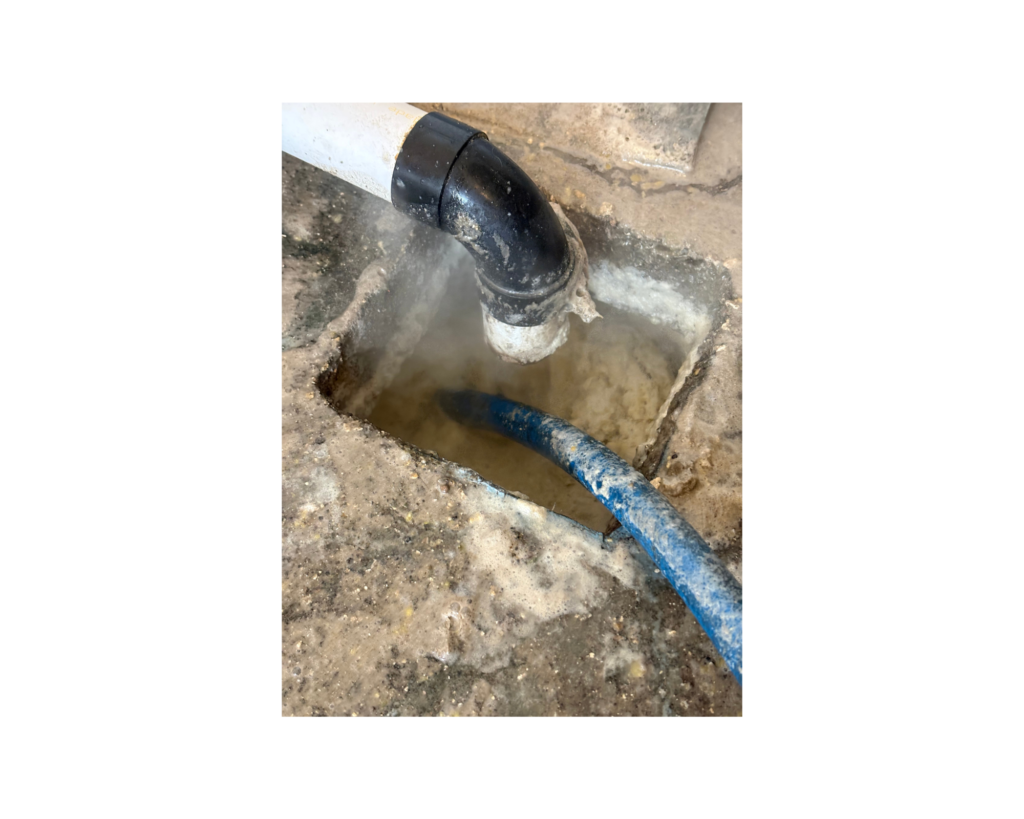
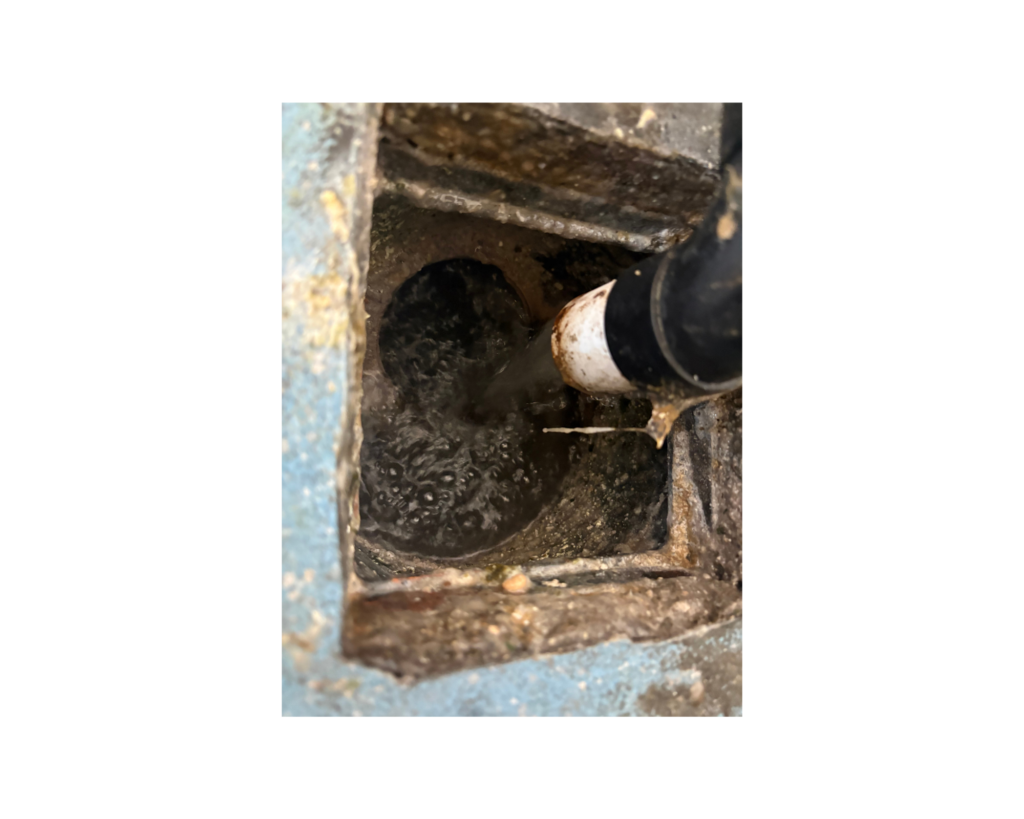
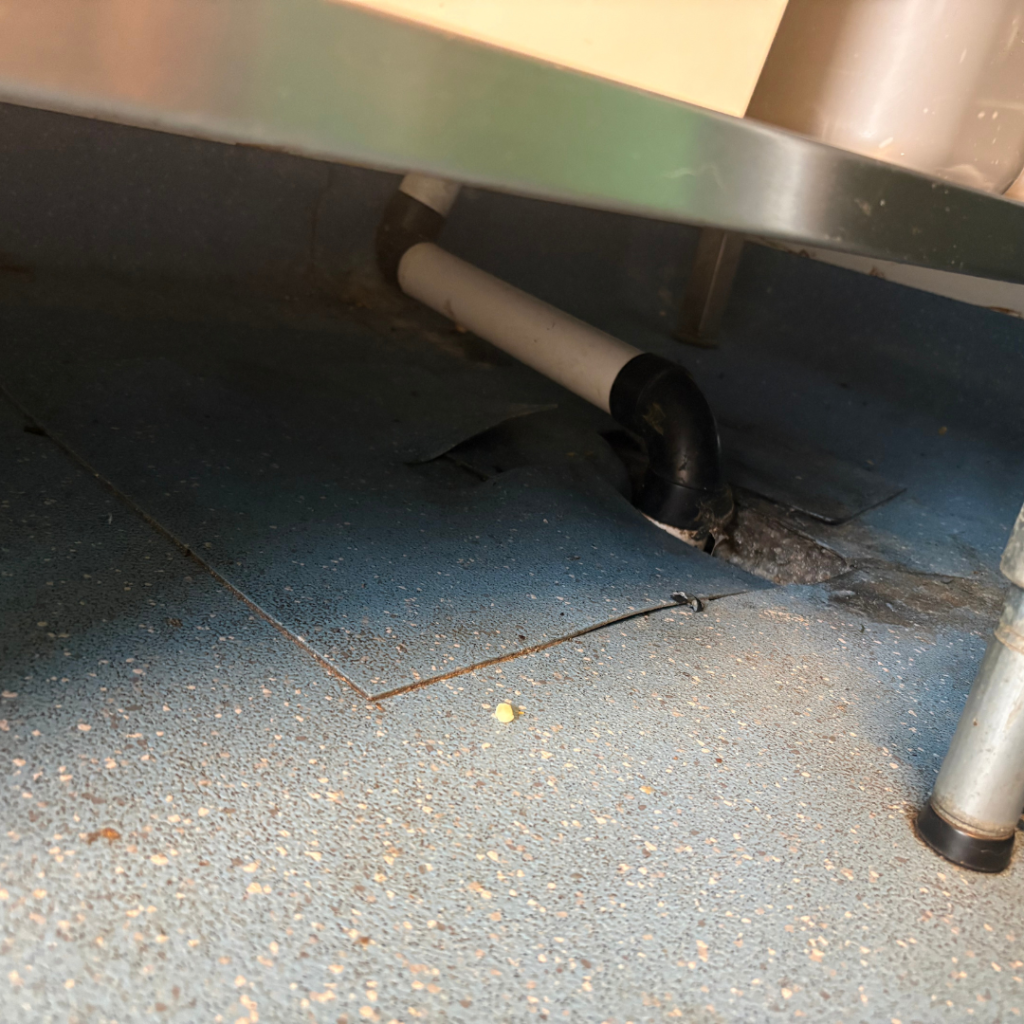
High pressure water jetting in progressFloor gully now flowing Visible fat and fat build upEverything put back after, ready for deep clean.
Process of this particular blockage:
> Use high pressure water jetting to reach the blockage and break it up.
> Pull the jetting hose back and forth the entire length of the underground pipe, cutting and flushing any remaining buildup.
> Use the remaining water from the jetting machine to flush the kitchen floor drain gully to use sheer volume to ensure the blockage is definitely gone and won’t come back anytime soon.
> Put everything back, test the kitchen sinks and dishwasher, and check the kitchen gully is coping with the water coming through.
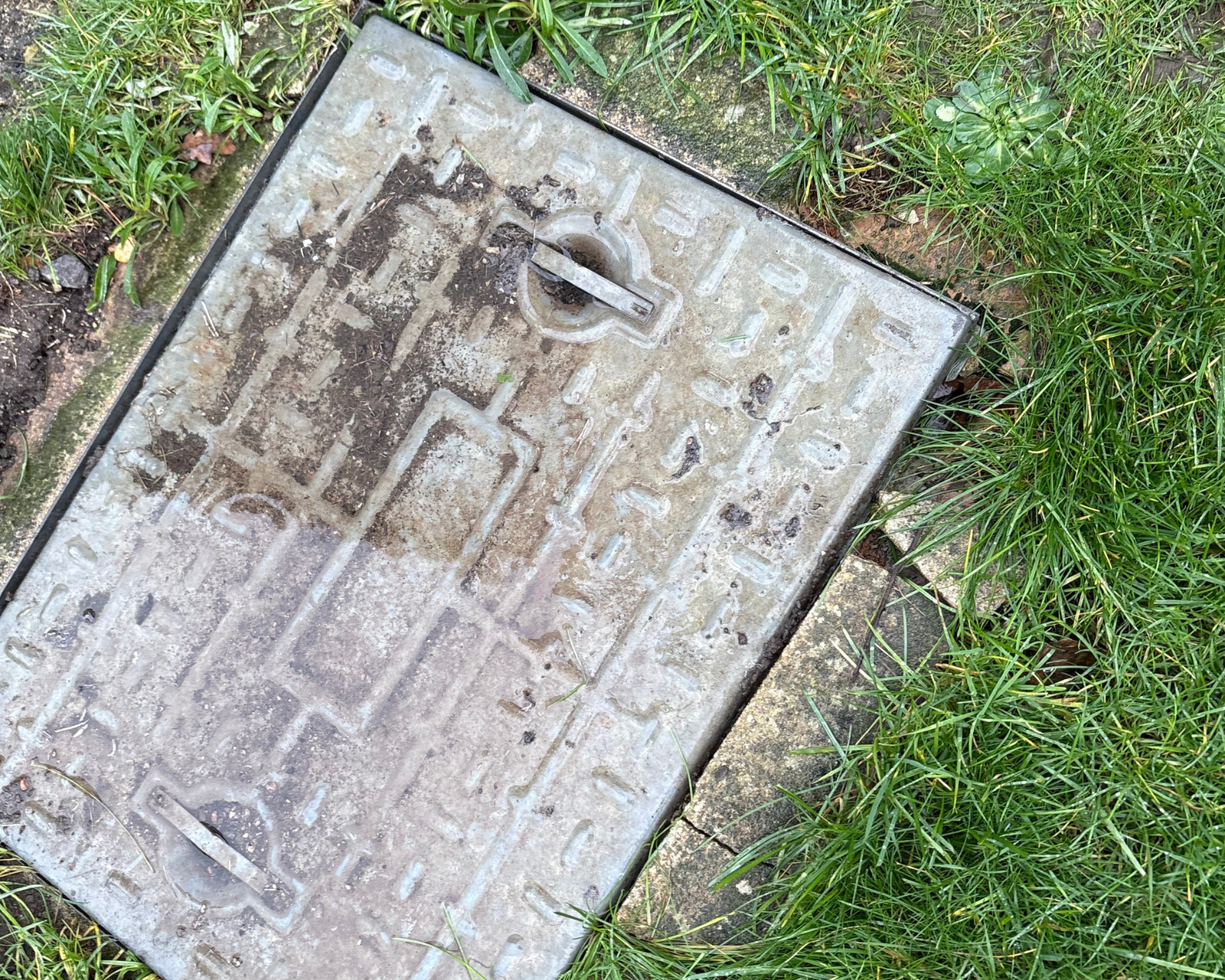
> If found, check downstream for flow (in this case we found an external manhole around the corner we could check to confirm).
> Paperwork and coffee.
How to Prevent Fats, Oils and Grease from Blocking Commercial Kitchen Drains
This particular kitchen wasn’t quite big or busy enough for a traditional grease trap, and it took over a decade for this to build up – so in this case we’ve set up a six-monthly PPM (pre-planned maintenance) plan to degrease the kitchen drainage preemptively. If six months is too soon, we’ll adjust it accordingly but the important thing is that they now have some form of FOG management, keeping them compliant and preventing disruption to their business.
This job just proved that even the most careful, smaller kitchens can succumb to fatbergs, given enough time. Here are the top three ways to combat fat and grease before it affects your business:
PPM
Pre-planned maintenance
Convenient and Cheaper
This is the best brute force method of ensuring your drains keep flowing.
grease traps
Most effective
Sizes for Most Kitchens
This proves you are compliant, sustainable and shows an obvious, visible control measure to auditors and potential customers.
FOg management
staff training/ control measures
Most Cost Effective
This is the best method of preventing fat and grease. Train your staff, provide food waste bins and appropriate plugs, etc and minimise FOG from the source.
Ideally you want to use a combination of the above, using the logic that you’ve trained your staff and provided all the equipment you can and even put signs up to remind people, but through sheer volume (especially during busy periods) some food waste and grease will get through.
This is where the grease trap comes in, capturing the reduced food waste in a basket (usually) before separating the free flowing fat and grease molecules through different compartments, allowing cleaner waste water to enter the waste pipes.
If you install a grease trap yourself (or ask a plumber/drainage company to install one), make sure:
>The potwash or any appliance that pumps out hot water should be an adequate distance from where the grease trap is installed, even if you run the incoming waste pipe to ensure distance – this is because the water temperature can affect how the fat and grease sits in the grease trap unit and could allow it to escape.
> The grease trap should be sized correctly to allow for your average plates, or customers per week. A unit that’s too big could be just as ineffective as one too small, and create other issues like smells.
> The installed grease trap should be in a position where staff can easily maintain it, for example daily food waste emptying and weekly skimming, and for maintenance to be carried out by reaching around all sides and having the inlet and outlet accessible.
Left untreated, grease build-up can eventually force a commercial kitchen to stop operating until the drainage system is cleared.
DrainHub assists restaurants, cafés and commercial kitchens across Oxford and the wider Oxfordshire area including:
Having spent almost 20 years in the UK drainage industry, I thought it was about time I put what I’ve learned to good use.
Many people have asked how they can deal with drainage problems themselves before having to call someone out, or expressed interest in how something works, such as equipment used or an aspect of their drains, so I made http://drainhub.uk to answer those questions and help people at a DIY level.
As soon as the sinks were tested and the floor drain (gully) started to back up, it was clear from visible grease that this would take more than a simple plunge to get it going. Luckily, our jetting hose could reach from the back door, so we were able to use high pressure water jetting…
Manhole Cover Replacement in Oxfordshire We don’t just unblock drains, we make sure your property is left safe and in good condition. Sometimes we come across broken or damaged manhole covers, which if left alone can become bigger problems in the future – in particular they can be prime trip or fall hazards and even…
Thame is a traditional Oxfordshire market town with a busy high street, expanding housing developments, and thriving business areas. Blocked drains or manhole cover problems here can affect both homes and businesses — and DrainHub is your local solution. 🏠 Residential Drain Services in Thame We provide: 🏢 Commercial & Industrial Drain Services We support:…



Leave a Reply